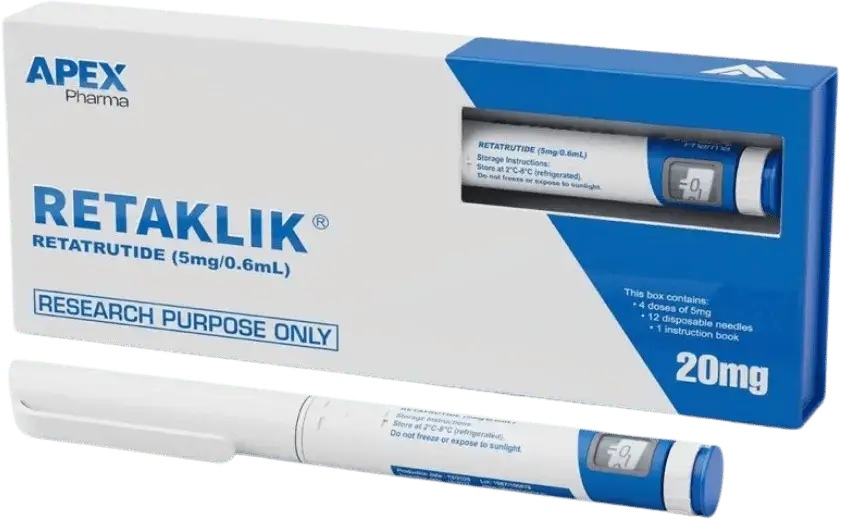
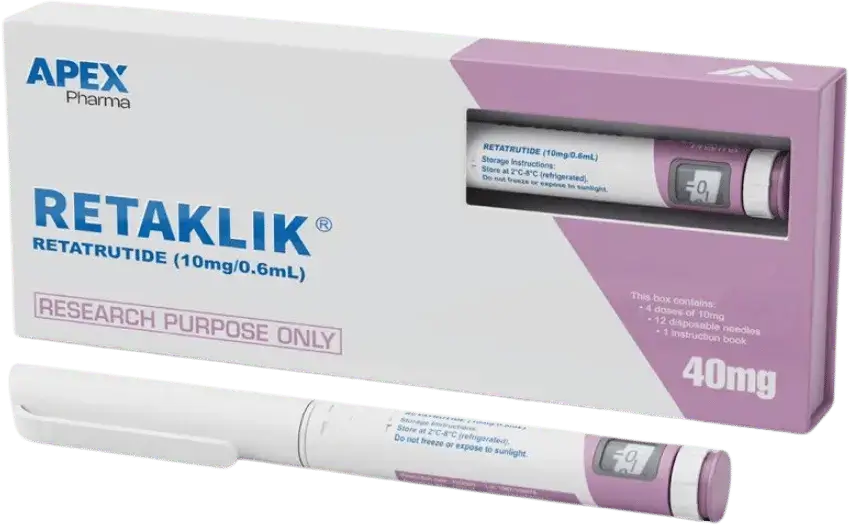
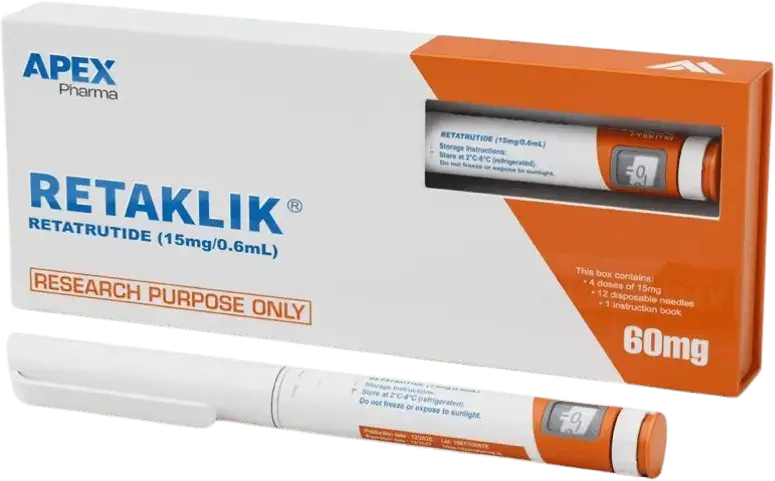
Tirzepatide 60mg
Larger volumes? Bulk and wholesale pricing is available on request.
Overview
Tirzepatide 60mg is a higher-total-content presentation of tirzepatide, a dual GIP and GLP-1 receptor agonist.
Tirzepatide has become an important compound in metabolic research because it works through two incretin-related receptor pathways rather than GLP-1 alone. Research involving tirzepatide has looked at areas including glucose regulation, appetite, body weight and broader metabolic outcomes.
The 60 mg stated on this product refers to the total amount associated with the complete presentation. It should not be confused with an individual clinical dose or interpreted as a recommended amount to use.
That distinction is particularly important when comparing higher-content products with authorised tirzepatide medicines, which use defined individual strengths and established dosing schedules.
What Is Tirzepatide 60mg?
Tirzepatide is a peptide-based compound with activity at two receptors:
- glucose-dependent insulinotropic polypeptide (GIP) receptor
- glucagon-like peptide-1 (GLP-1) receptor
These receptors form part of signalling systems involved in the body’s response to food, glucose and energy intake.
The combination of GIP and GLP-1 receptor activity is what distinguishes tirzepatide from compounds that work primarily through GLP-1 alone.
In the case of Tirzepatide 60mg, the number describes the stated total product content. It does not establish how much should be administered at one time and should not be treated as a dosing recommendation.
Understanding the Dual-Receptor Mechanism
Tirzepatide is generally described as a dual GIP/GLP-1 receptor agonist.
GLP-1 has several recognised roles in metabolic physiology. These include glucose-dependent insulin secretion, appetite-related signalling and effects on gastric emptying.
GIP is another incretin hormone released in response to nutrient intake. Its receptor is also involved in insulin signalling and metabolic regulation.
Tirzepatide was developed to combine activity at both receptor systems within one molecule.
Researchers have investigated whether this combined mechanism can produce metabolic effects that differ from those seen with compounds targeting GLP-1 alone.
The mechanism should not, however, be interpreted in isolation. Findings depend on the population studied, individual dose, treatment duration and other aspects of the research protocol.
Why Is Tirzepatide Studied in Metabolic Research?
Much of the clinical interest around tirzepatide comes from research involving type 2 diabetes, obesity and weight management.
Clinical programmes have examined several outcomes, including:
- changes in body weight
- blood glucose measures
- insulin-related responses
- appetite and energy intake
- cardiometabolic markers
- longer-term metabolic outcomes
Results from these studies relate to specific clinical protocols and defined individual doses.
They should not be interpreted as evidence that a product containing a total of 60 mg represents a 60 mg clinical dose.
Tirzepatide 60mg and Weight-Management Research
Weight management is one of the areas most commonly associated with tirzepatide.
Clinical studies have investigated tirzepatide in adults living with obesity or overweight, including the SURMOUNT clinical programme. These trials have reported meaningful changes in body weight among participants receiving particular tirzepatide regimens.
There is an important difference between those trial regimens and a product labelled Tirzepatide 60mg.
Clinical studies use controlled individual doses, often with structured dose escalation. A 60 mg product label instead describes the stated total quantity associated with the presentation.
The two figures should therefore not be treated as equivalent.
What Does 60mg Actually Mean?
The 60 mg figure identifies the stated total amount of tirzepatide contained in, or associated with, this product presentation.
It does not mean:
- 60 mg is an established individual dose.
- 60 mg should be taken at one time
- 60mg is an authorised weekly dose
- A 60 mg presentation is automatically more effective than another presentation.
Total product content and individual dosing are separate concepts.
This becomes particularly relevant with multi-use or higher-total-content formats. A larger total quantity may simply mean that more material is contained within the overall presentation.
Anyone comparing products should therefore look beyond the headline milligram figure.
Tirzepatide 60mg vs Tirzepatide 40mg
The most obvious difference between a Tirzepatide 60 mg and Tirzepatide 40 mg presentation is the stated total quantity.
Both contain the same underlying compound, tirzepatide, and therefore share the same basic GIP and GLP-1 receptor mechanism.
A higher total amount does not change tirzepatide into a different compound or create a different receptor profile.
It also does not mean that the individual amount used in research should automatically be higher.
When comparing the two presentations, relevant details include the total content, concentration, format, manufacturer information, batch documentation and independent analytical results.
Tirzepatide and Semaglutide Are Not the Same Compound
Tirzepatide and semaglutide are frequently discussed together because both have been studied extensively in metabolic medicine.
Their receptor activity differs.
- Semaglutide: primarily GLP-1 receptor agonism
- Tirzepatide: GIP and GLP-1 receptor agonism
Tirzepatide therefore introduces GIP receptor activity alongside GLP-1.
This pharmacological difference is useful when understanding the two compounds, but receptor count alone does not provide a complete comparison of clinical effectiveness or suitability.
Those questions require evidence from controlled studies using defined treatment protocols.
Tirzepatide Compared with Retatrutide
Retatrutide belongs to a newer area of multi-receptor metabolic research and is often mentioned alongside tirzepatide.
The basic distinction is straightforward:
- Tirzepatide: GIP + GLP-1 receptor agonist
- Retatrutide: GIP + GLP-1 + glucagon receptor agonist
Retatrutide adds glucagon receptor activity to the two pathways targeted by tirzepatide.
There is also an important regulatory difference. Tirzepatide is used in authorised medicines for defined indications, while retatrutide remains an investigational compound undergoing clinical development.
The two compounds should therefore not be treated as interchangeable.
Tirzepatide 60mg in the UK
Someone searching for tirzepatide 60mg in the UK may find products with different brands, formats, concentrations and total quantities.
The presence of tirzepatide as an active ingredient does not automatically mean that every product is equivalent to an authorised UK medicine.
The regulatory status of the individual product matters.
Other details worth checking include the manufacturer, batch identification, stated content, analytical documentation, storage requirements and product format.
For medical treatment, patients should obtain an appropriately authorised tirzepatide medicine through legitimate healthcare and pharmacy channels following clinical assessment.
Why Product Strength Needs Context
Milligram figures can be misleading when products with different presentations are compared.
A product containing a total of 60 mg is not necessarily an individual 60 mg dose.
Similarly, it should not automatically be described as “stronger” simply because the total quantity is higher than a 20 mg or 40 mg presentation.
Several details can affect how a product is described, including:
- total peptide content
- concentration
- fill volume
- delivery format
- number of intended individual portions
- manufacturer specifications
For this reason, the complete product information should be considered rather than relying on the headline strength alone.
Tirzepatide 60mg Product Information
Product: Tirzepatide
Stated Total Strength: 60 mg
Compound: Tirzepatide
Receptor Activity: GIP + GLP-1
Category: Dual incretin receptor agonist
Market: UK
Documentation: Batch information and analytical documentation should be checked for the specific product supplied.
Specifications
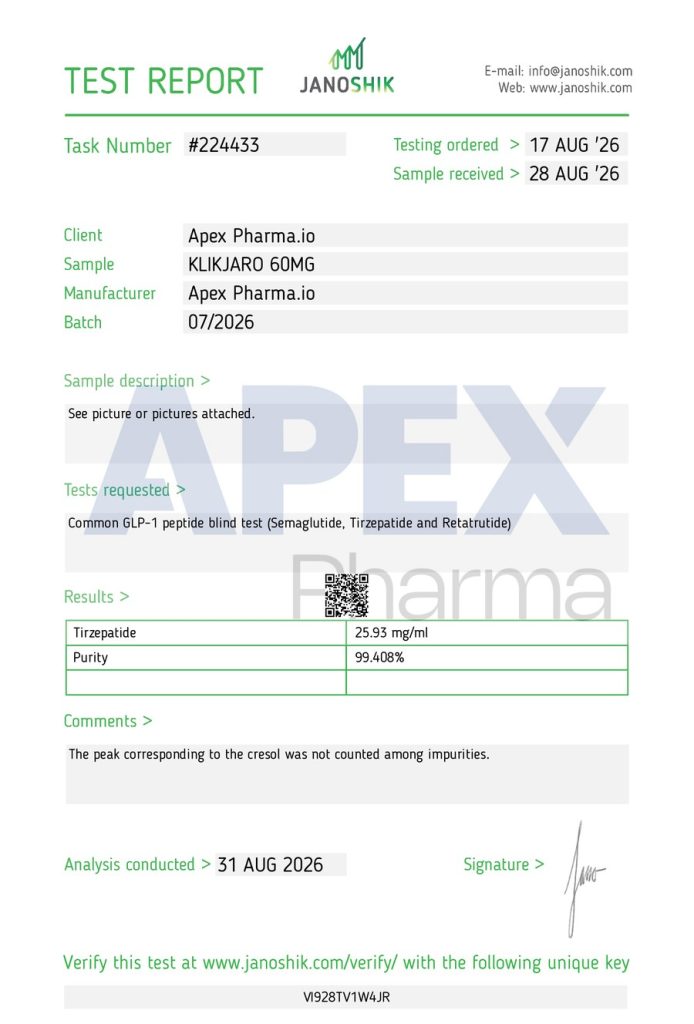
Certificate of Analysis
Independent third-party analysis for the current batch. Verify identity and purity before use.
Storage & handling
Shipping
Orders placed before 15:00 GMT on a working day are dispatched the same day from the United Kingdom in temperature-conscious, discreet packaging. Tracked UK delivery typically arrives within 1–2 working days; international timelines vary by destination and customs.
Tirzepatide 60mg describes a product presentation with a stated total quantity of 60mg of tirzepatide. Tirzepatide acts at both GIP and GLP-1 receptors and has been extensively investigated in metabolic research.
No. The 60 mg figure describes the stated total amount associated with the complete product presentation. It should not be interpreted as a recommended individual or weekly dose.
The principal difference is the stated total product content: 60 mg compared with 40 mg. The underlying compound and its GIP/GLP-1 receptor activity remain the same. Product concentration, format, batch information and other specifications should be checked separately.
Not necessarily in the way the word "stronger" is normally understood. A higher total milligram figure means a greater stated total quantity. It does not establish a higher individual dose or predict a greater clinical effect.
Tirzepatide activates GIP and GLP-1 receptors. These receptors are involved in incretin and metabolic signalling, including pathways related to glucose-dependent insulin secretion, appetite and energy regulation.
No. Semaglutide primarily acts through the GLP-1 receptor. Tirzepatide acts through both GIP and GLP-1 receptors. They are separate compounds with different pharmacological profiles.
No. Tirzepatide targets GIP and GLP-1 receptors. Retatrutide targets GIP, GLP-1 and glucagon receptors and remains an investigational compound. They should not be treated as interchangeable products.
A product labelled 60mg should not be interpreted as an authorised 60mg individual dose. Authorised tirzepatide medicines use defined individual strengths and dosing schedules. The regulatory status of the specific 60 mg presentation should be checked separately.
Check the stated total content, manufacturer, formulation, batch number, analytical documentation, expiry information, storage conditions and regulatory status. Where a Certificate of Analysis is provided, it should correspond to the actual batch supplied.
Clinical evidence relates to defined tirzepatide regimens used under controlled study conditions. It should not automatically be interpreted as evidence for taking or administering the complete contents of a product labelled 60 mg.
Tirzepatide is a dual GIP and GLP-1 receptor agonist with an established body of metabolic and clinical research. The 60mg designation on this product describes its stated total content and should remain clearly separated from the individual doses used in authorised medicines or controlled clinical studies. Product identity, batch documentation and analytical results should be verified against the specific Tirzepatide 60 mg product supplied.