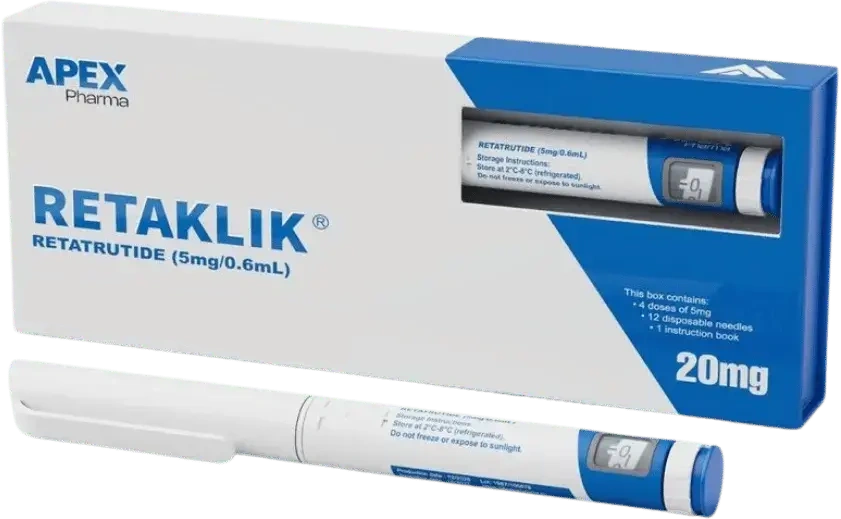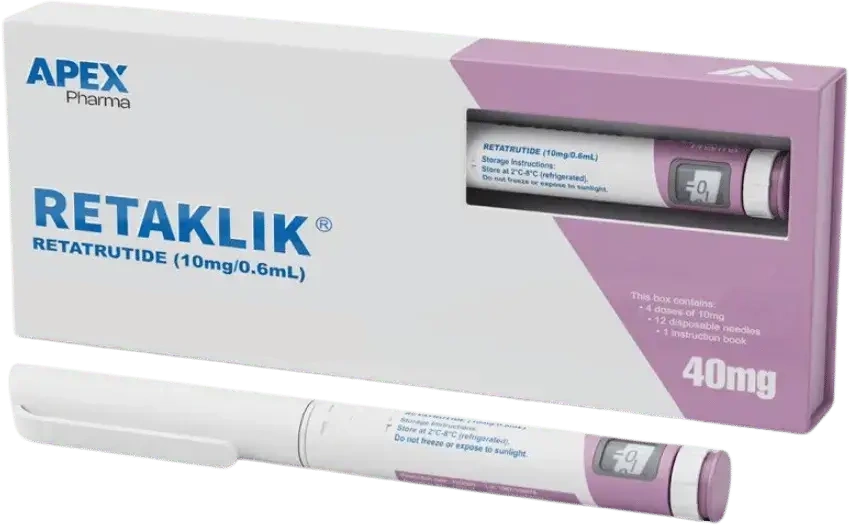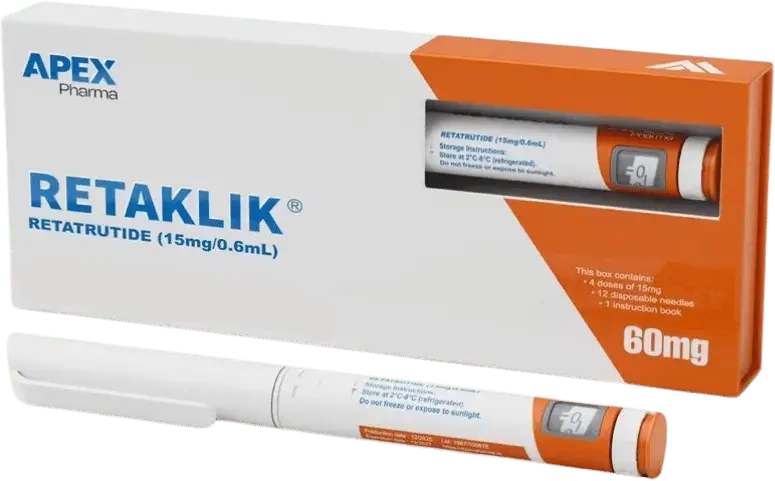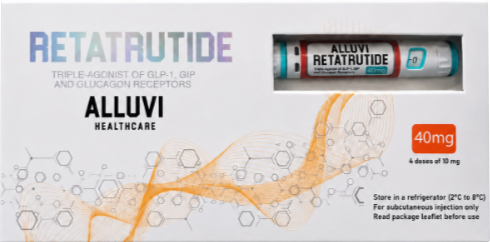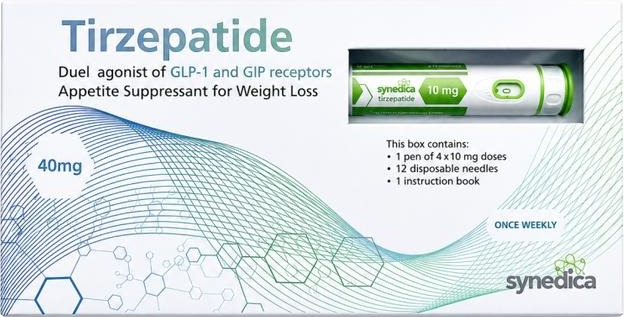
Tirzepatide 40mg
Larger volumes? Bulk and wholesale pricing is available on request.
Overview
Tirzepatide 40mg is a presentation containing a stated total of 40mg of tirzepatide. Tirzepatide is a peptide-based medicine known for acting on two hormone receptors involved in metabolic regulation: GIP and GLP-1.
Interest in tirzepatide has grown considerably in the UK, particularly around weight management, blood glucose regulation and the wider development of incretin-based medicines.
It is important to understand what 40mg means in this context. The figure describes the stated amount associated with this particular product presentation. It should not be read as a recommended 40mg dose. Clinical use of authorised tirzepatide medicines follows specific strengths and dosing schedules.
What Is Tirzepatide 40mg?
Tirzepatide is a dual GIP and GLP-1 receptor agonist. Instead of working through only the GLP-1 pathway, it also activates receptors for glucose-dependent insulinotropic polypeptide (GIP).
Both hormones belong to the incretin system and have roles in the body’s response to food and glucose.
This dual action is one of the main characteristics separating tirzepatide from earlier GLP-1 receptor agonists such as semaglutide.
The term Tirzepatide 40mg simply identifies the stated strength of this particular presentation. It should be kept separate from the individual doses used in approved treatment schedules or clinical studies.
How Does Tirzepatide Work?
Tirzepatide’s activity centres on two related signalling pathways.
GLP-1 is an incretin hormone involved in glucose-dependent insulin secretion, appetite regulation and gastric emptying.
GIP is another naturally occurring incretin hormone. Its receptors are involved in insulin secretion and broader metabolic signalling.
Tirzepatide has been designed to activate both receptors within a single molecule. Researchers have investigated how this combined activity influences blood glucose, appetite, body weight and other metabolic measures.
The effects seen in clinical trials relate to carefully controlled treatment protocols and should not be assumed simply from the total amount stated on a product.
Tirzepatide and Weight-Loss Research
Weight management has become one of the best-known areas of tirzepatide research.
Large clinical trials have evaluated tirzepatide in adults living with obesity or overweight. The SURMOUNT programme, for example, has examined changes in body weight and several related health measures over extended treatment periods.
These studies demonstrated substantial average weight reductions in participants receiving certain tirzepatide regimens, although results differed according to dose, study population, treatment duration and individual response.
This evidence should be interpreted in its proper context. Clinical studies do not investigate a general “Tirzepatide 40mg” dose. They use defined once-weekly doses and structured dose-escalation schedules.
Tirzepatide vs Semaglutide
Tirzepatide and semaglutide are often discussed together, but they are different medicines.
The simplest distinction is their receptor activity:
- Semaglutide: GLP-1 receptor agonist
- Tirzepatide: GIP + GLP-1 receptor agonist
Semaglutide works primarily through GLP-1 receptors. Tirzepatide combines GLP-1 activity with GIP receptor activation.
Both compounds have substantial clinical evidence behind them, but differences in mechanism alone should not be used to decide which medicine is appropriate for an individual.
Tirzepatide vs Retatrutide
Tirzepatide is also increasingly compared with retatrutide because both compounds act on more than one metabolic receptor.
Their mechanisms can be summarised as:
- Tirzepatide: GIP + GLP-1
- Retatrutide: GIP + GLP-1 + glucagon
Retatrutide therefore adds glucagon-receptor activity to the two pathways targeted by tirzepatide.
There is another important distinction: tirzepatide is already an authorised medicine for specific indications, while retatrutide remains an investigational compound undergoing clinical development.
What Does Tirzepatide 40mg Mean?
The 40mg figure refers to the stated total amount of tirzepatide associated with this product presentation.
It does not mean that 40mg should be administered at once.
This distinction matters because authorised tirzepatide treatment uses substantially different individual dose strengths. In the UK, approved tirzepatide treatment follows a structured once-weekly schedule, with dose adjustments made according to the authorised product information and clinical circumstances.
The total amount supplied and the amount used for an individual dose are therefore two different measurements.
Tirzepatide 40mg UK
People searching for Tirzepatide 40mg UK may encounter a mixture of clinical information, authorised medicines and products marketed using different total strengths.
These should not automatically be treated as equivalent.
For UK customers, the identity of the product, manufacturer, stated concentration or strength, batch information and regulatory status are particularly important. A familiar active ingredient does not necessarily mean every product containing that ingredient has the same approval, manufacturing standards or instructions.
Where tirzepatide is being considered for medical treatment, UK patients should use an appropriately authorised product supplied through legitimate healthcare and pharmacy channels.
Tirzepatide 40mg and Product Strength
A larger total product strength does not necessarily mean a stronger individual dose.
For example, a presentation containing a total of 40mg may be designed differently from a single-dose medicine containing a much smaller quantity. The total content, concentration, delivery system and intended individual dose all need to be considered separately.
For this reason, comparisons based only on the number printed alongside “mg” can be misleading.
The manufacturer’s product information should always be used to establish exactly what the stated strength represents.
Why Has Tirzepatide Attracted So Much Attention?
Tirzepatide represents an important development in incretin-based medicine because it combines GIP and GLP-1 receptor activity in one molecule.
Clinical research has investigated its effects across several areas, including:
- Body-weight reduction
- Blood glucose regulation
- Insulin-related metabolic responses
- Obesity and associated health conditions
- Longer-term cardiometabolic outcomes
The continuing research around tirzepatide has also helped drive interest in newer multi-receptor compounds, including triple agonists such as retatrutide.
Tirzepatide 40mg Product Information
Product: Tirzepatide
Stated Strength: 40mg
Compound: Tirzepatide
Mechanism: Dual GIP and GLP-1 receptor agonist
Product Format: Check the individual product packaging and manufacturer information
Market: UK
Important Information
The 40mg stated product strength should not be interpreted as a recommended single dose. Tirzepatide is a prescription medicine in the UK, and authorised treatment follows specific dosing, prescribing and monitoring requirements.
Product identity, strength, manufacturer information and regulatory status should be checked before assuming that a product is equivalent to an authorised UK tirzepatide medicine.
Specifications
Certificate of Analysis
Independent third-party analysis for the current batch. Verify identity and purity before use.
Storage & handling
Shipping
Orders placed before 15:00 GMT on a working day are dispatched the same day from the United Kingdom in temperature-conscious, discreet packaging. Tracked UK delivery typically arrives within 1–2 working days; international timelines vary by destination and customs.
Tirzepatide 40mg refers to a product presentation with a stated total of 40mg of tirzepatide. Tirzepatide is a dual GIP and GLP-1 receptor agonist used in authorised medicines for specific indications. The 40mg figure describes the product presentation and should not be interpreted as a recommended single dose.
Tirzepatide activates both GIP and GLP-1 receptors. These incretin-related pathways are involved in glucose-dependent insulin secretion, appetite and wider metabolic signalling. Its dual-receptor mechanism distinguishes tirzepatide from medicines that act only on GLP-1 receptors.
Tirzepatide has been studied extensively for weight management, and authorised tirzepatide medicines are used for weight management in eligible adults in the UK. However, a product labelled 40mg should not be interpreted as a 40mg weight-loss dose. Approved treatment follows defined individual doses and prescribing guidance.
No. A 40mg label may describe the total amount contained within a particular product rather than an individual dose. Authorised tirzepatide treatment uses specific once-weekly doses, and 40mg is not a standard single-dose strength in the approved UK dosing schedule.
The main difference is receptor activity. Semaglutide acts primarily on GLP-1 receptors, whereas tirzepatide activates both GIP and GLP-1 receptors. They are separate medicines with their own clinical evidence, licensed indications, strengths and prescribing information.
Tirzepatide is a dual agonist targeting GIP and GLP-1 receptors. Retatrutide targets three pathways: GIP, GLP-1 and glucagon receptors. Another important difference is regulatory status: authorised tirzepatide medicines are available for specific uses, whereas retatrutide remains investigational.
Tirzepatide is a prescription-only medicine in the UK. Anyone seeking tirzepatide for medical treatment should obtain an appropriately authorised product through legitimate healthcare and pharmacy channels following a suitable clinical assessment.
Do not compare products on the 40mg figure alone. Check the manufacturer, exact formulation, concentration, delivery format, batch details, expiry information and regulatory status. A product containing the same active ingredient is not automatically equivalent to an authorised UK medicine.
Not necessarily. Total product content and the amount intended for an individual dose are different things. Concentration, formulation and delivery system can also vary. A larger total milligram figure therefore should not automatically be interpreted as a stronger individual treatment.
Tirzepatide is an authorised prescription medicine in the UK for specified indications and under defined conditions of use. However, this does not mean that every product marketed as "Tirzepatide 40mg" is MHRA-authorised. The regulatory status of the specific brand and presentation should be checked separately.
Intended applications are limited to laboratory research such as receptor-binding assays and in-vitro metabolic studies. Not for human or animal administration. Retatrutide is not an approved medicine.