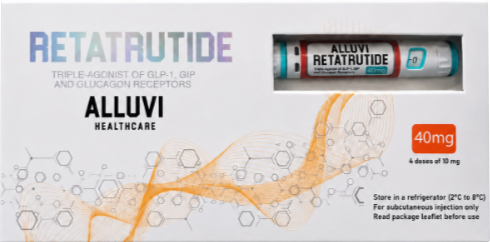
Retatrutide 40mg – Alluvi
Larger volumes? Bulk and wholesale pricing is available on request.
Overview
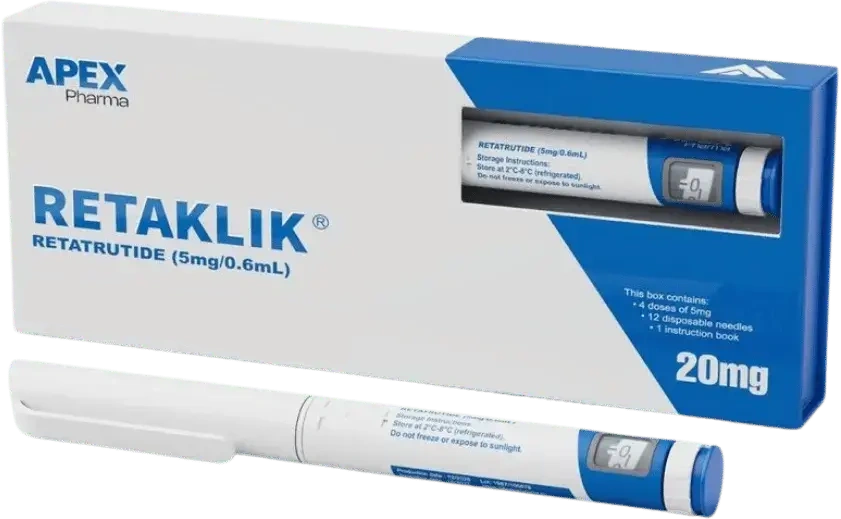
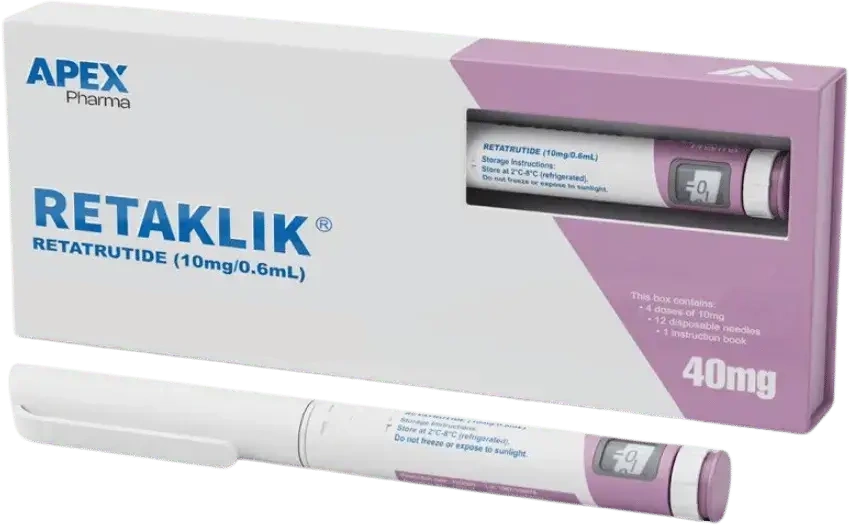
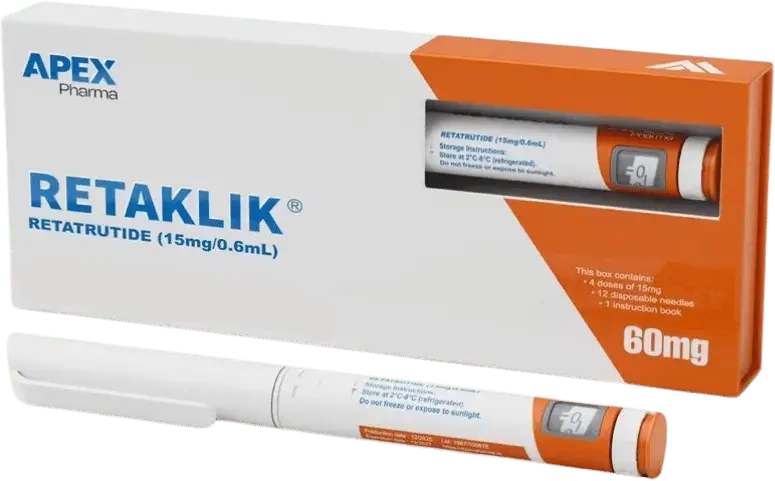
Retatrutide 40mg (Alluvi) is a presentation containing 40mg of retatrutide, an investigational peptide currently being studied for its effects on metabolic signalling, body weight and related cardiometabolic outcomes.
Retatrutide, also known by its development code LY3437943, has attracted considerable attention because a single molecule activates three hormone receptors: GIP, GLP-1 and glucagon. This distinguishes it from compounds that target one or two incretin-related pathways.
The 40mg stated strength refers to the amount associated with this Alluvi presentation. It should not be interpreted as an established or recommended clinical dose. Published retatrutide trials have investigated specific dosing schedules under controlled clinical conditions, and 40mg has not been established as an approved therapeutic dose.
What Is Retatrutide 40mg?
Retatrutide is an investigational triple hormone receptor agonist developed to activate:
- GIP (glucose-dependent insulinotropic polypeptide) receptors
- GLP-1 (glucagon-like peptide-1) receptors
- Glucagon receptors
Bringing these three receptor activities together in one molecule is what makes retatrutide scientifically distinctive.
GLP-1 and GIP are both involved in metabolic and glucose-related signalling, while glucagon has an important role in glucose and energy metabolism. Researchers are studying whether activating all three pathways together produces effects that differ from those seen with existing single- and dual-receptor medicines.
How Does Retatrutide Work?
Retatrutide’s mechanism is best understood by looking at the three receptors it activates rather than considering it simply as another GLP-1 compound.
GLP-1 signalling is associated with appetite regulation, glucose-dependent insulin secretion and gastric emptying.
GIP signalling is another component of the incretin system and has roles in insulin response and energy metabolism.
Glucagon signalling contributes to the regulation of glucose availability, substrate utilisation and energy balance.
Retatrutide combines activity at all three receptors. The interaction between these pathways remains an active area of clinical research.
Retatrutide and Weight-Loss Research
Interest in searches such as Retatrutide weight loss has largely followed the publication of clinical-trial results.
A Phase 2 randomised trial involving 338 adults with obesity, or overweight with a weight-related condition, evaluated several once-weekly retatrutide regimens over 48 weeks.
At week 48, the mean change in body weight was -24.2% in the 12mg group, compared with -2.1% with placebo. The study also investigated 1mg, 4mg and 8mg regimens.
These findings relate specifically to the doses, participants and conditions used within that clinical trial. They should not be interpreted as evidence that a product labelled Retatrutide 40mg represents a 40mg clinical dose or would produce the same results.
More recent Phase 3 research has continued to investigate retatrutide across obesity and related metabolic conditions.
Retatrutide vs Tirzepatide and Semaglutide
One of the clearest differences between retatrutide, tirzepatide and semaglutide is the number of hormone receptors targeted.
- Semaglutide: GLP-1 receptor agonist
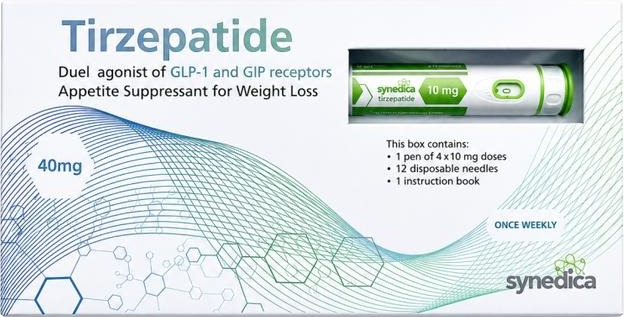
- Tirzepatide: GIP + GLP-1 receptor agonist
- Retatrutide: GIP + GLP-1 + glucagon receptor agonist
Retatrutide therefore adds glucagon-receptor activity to the GIP and GLP-1 pathways targeted by tirzepatide.
This does not establish retatrutide as better than semaglutide or tirzepatide. They are different molecules with different evidence bases, and direct conclusions should not be drawn simply from the number of receptors involved.
What Does Retatrutide 40mg Mean?
For this Alluvi presentation, 40mg identifies the stated product strength.
It is important to separate this figure from the doses reported in clinical studies. Retatrutide research uses carefully defined protocols involving particular doses, escalation schedules and study populations.
For example, the published Phase 2 obesity trial evaluated once-weekly maintenance doses up to 12mg. The 40mg stated on this product should therefore not be presented as a clinically established 40mg treatment dose.
Keeping the product strength and clinical-trial dosing separate helps avoid misleading comparisons when reading published retatrutide research.
Retatrutide 40mg UK: What to Consider
People searching for Retatrutide 40mg UK should distinguish between information about the compound itself, clinical-trial evidence and claims made about individual products.
Retatrutide remains an investigational medicine. Its efficacy and safety continue to be evaluated through controlled clinical development programmes.
When assessing any product represented as containing retatrutide, information such as product identification, batch traceability, stated composition and supporting analytical documentation should be considered separately from published clinical findings.
Clinical-trial results apply to the investigational medicine and protocols used in those studies. They do not independently verify the identity, purity, strength or performance of a separately marketed product.
Why Retatrutide Continues to Attract Research Interest
The scientific interest surrounding retatrutide goes beyond weight change alone.
Its triple-agonist design gives researchers an opportunity to examine how GIP, GLP-1 and glucagon signalling may interact within the same molecule. Current research programmes are investigating retatrutide across obesity, type 2 diabetes and several obesity-related conditions.
This expanding evidence base makes retatrutide an important compound to follow within the broader development of multi-receptor metabolic therapies.
Alluvi Retatrutide 40mg Product Information
- Product: Retatrutide
- Brand: Alluvi
- Stated Strength: 40mg
- Compound: Retatrutide (LY3437943)
- Mechanism: GIP, GLP-1 and glucagon receptor agonist
- Status: Investigational compound
Specifications
Certificate of Analysis
Independent third-party analysis for the current batch. Verify identity and purity before use.
Storage & handling
Shipping
Orders placed before 15:00 GMT on a working day are dispatched the same day from the United Kingdom in temperature-conscious, discreet packaging. Tracked UK delivery typically arrives within 1–2 working days; international timelines vary by destination and customs.
Retatrutide 40mg (Alluvi) is a presentation labelled as containing 40mg of retatrutide, also known as LY3437943. Retatrutide is an investigational peptide that activates GIP, GLP-1 and glucagon receptors. The 40mg figure describes the stated product strength and should not be interpreted as an approved or recommended dose.
The 40mg refers to the stated amount of retatrutide in the Alluvi presentation. It does not mean that 40mg is a clinically established dose. Published retatrutide trials have investigated specific dosing regimens under controlled conditions, including once-weekly doses lower than 40mg.
Retatrutide acts as a triple receptor agonist, targeting GIP, GLP-1 and glucagon receptors. These signalling pathways are involved in areas such as glucose regulation, appetite, energy balance and metabolism. Researchers are studying how activating all three receptors within a single molecule may affect metabolic outcomes.
No. Retatrutide remains an investigational medicine and has not received UK marketing authorisation. Clinical development is ongoing, so products marketed as Retatrutide 40mg should not be confused with an MHRA-authorised retatrutide medicine.
No. Tirzepatide and retatrutide are different compounds. Tirzepatide activates GIP and GLP-1 receptors, whereas retatrutide additionally activates the glucagon receptor. This gives retatrutide its frequently described "triple agonist" mechanism.
Semaglutide primarily targets the GLP-1 receptor, while retatrutide targets GIP, GLP-1 and glucagon receptors. Although all three pathways are relevant to metabolic research, the compounds have different mechanisms and evidence bases. Retatrutide's additional receptor activity does not by itself establish that it is superior.
Yes. Retatrutide has been investigated in controlled clinical trials involving people with obesity or overweight. A published Phase 2 trial reported substantial mean weight reductions at certain studied once-weekly doses over 48 weeks. Those findings apply to the trial protocols and should not be interpreted as results for an Alluvi 40mg product.
No. A product labelled 40mg should not be interpreted as representing a standard 40mg treatment dose. Clinical studies of retatrutide use defined dosing and escalation protocols. Product strength and the amount administered within a clinical study are separate concepts.
Information about the product should be assessed separately from general retatrutide research. Useful points to check include the stated strength, batch identification, manufacturer or brand information, traceability and any available batch-specific analytical documentation. Clinical research on retatrutide does not independently verify a separately marketed product.
Retatrutide is still an investigational compound rather than an approved UK medicine. Research is continuing into its effects on obesity, type 2 diabetes and related metabolic conditions. Anyone reading about Retatrutide 40mg UK should therefore distinguish ongoing clinical research from authorised medical treatments.
Intended applications are limited to laboratory research such as receptor-binding assays and in-vitro metabolic studies. Not for human or animal administration. Retatrutide is not an approved medicine.