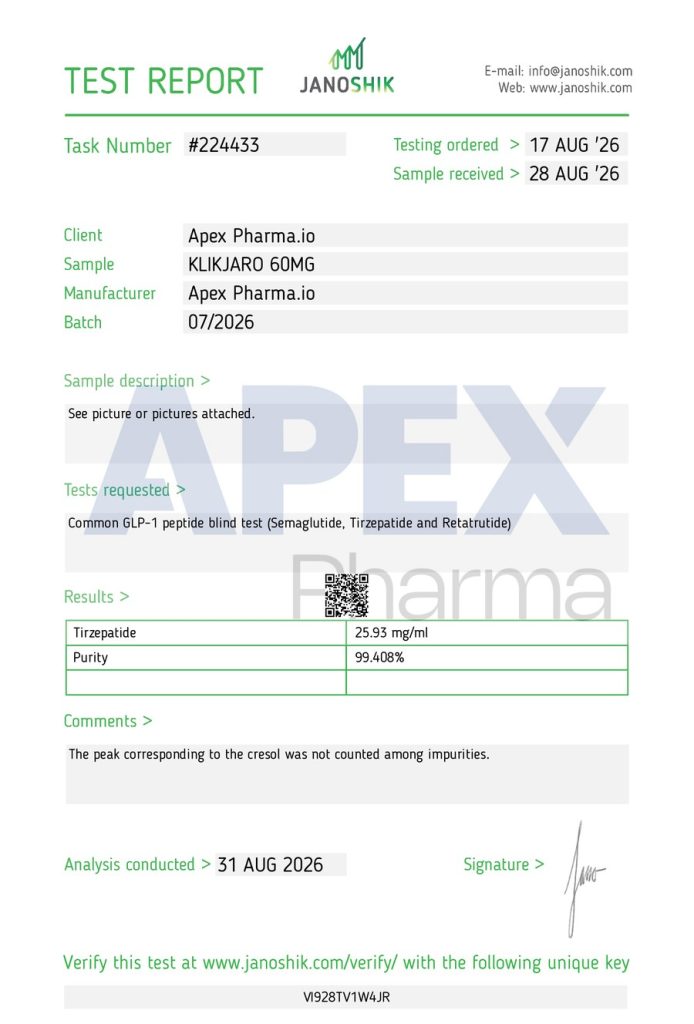
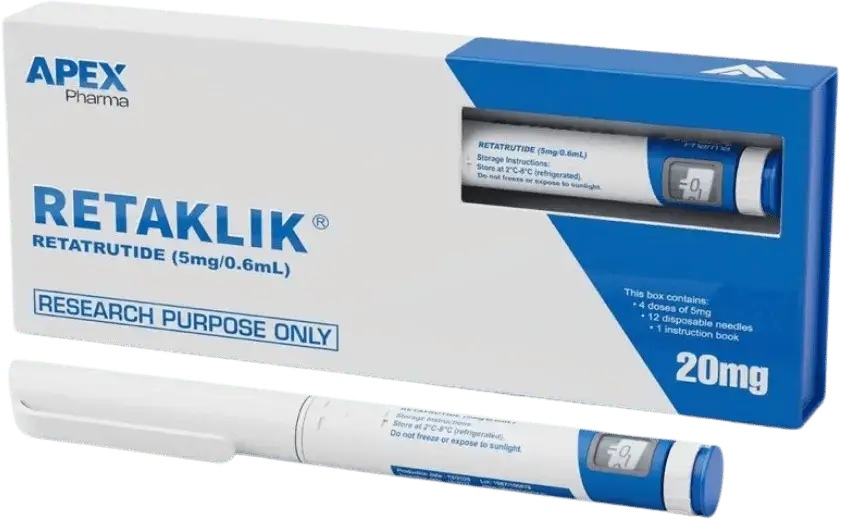
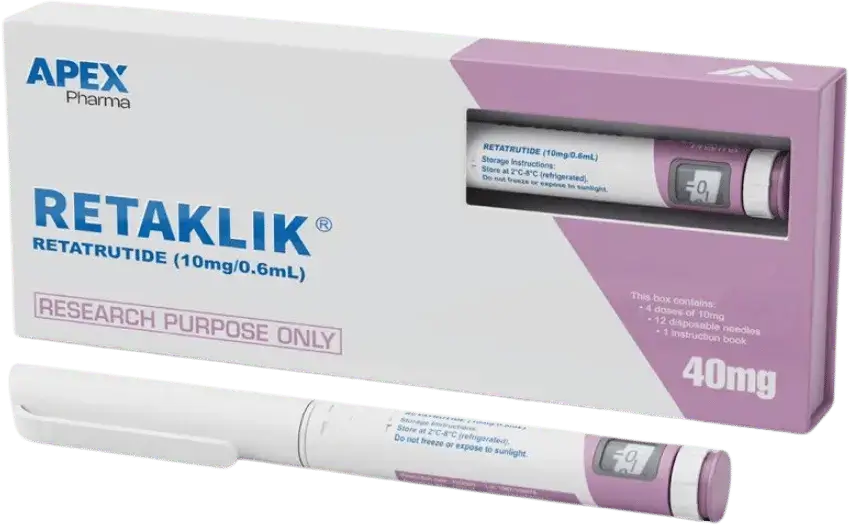
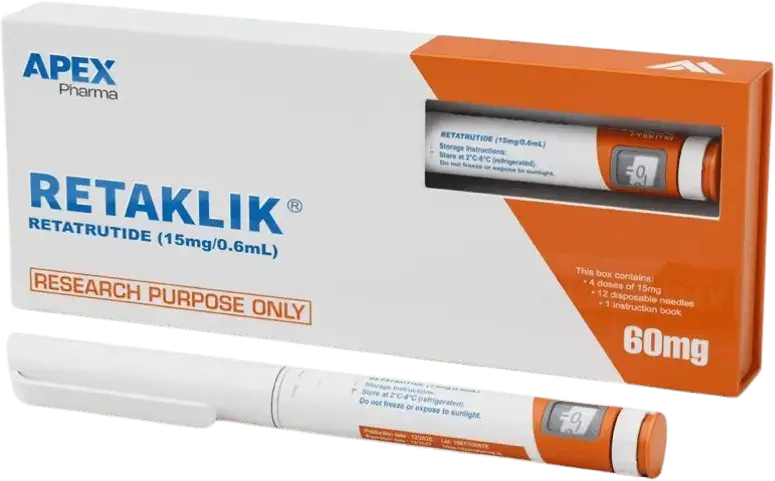
Tirzepatide 60 mg is our largest tirzepatide pen and the lowest cost per milligram, at £179.99 or £3.00 per mg. It comes from batch 07/2026, tested by Janoshik Analytical at 99.408% HPLC purity.
Why choose the 60 mg tirzepatide pen
The 60 mg pen suits longer comparison studies and keeps more of the work on a single batch. It costs less per milligram than any other pen in our range.
If you only need a smaller quantity, the 40 mg pen is the lower upfront cost.
Tirzepatide 60mg is a higher-total-content presentation of tirzepatide, a dual GIP and GLP-1 receptor agonist.
Tirzepatide has become an important compound in metabolic research because it works through two incretin-related receptor pathways rather than GLP-1 alone. Research involving tirzepatide has looked at areas including glucose regulation, appetite, body weight and broader metabolic outcomes.
The 60 mg stated on this product refers to the total amount associated with the complete presentation. It should not be confused with an individual clinical dose or interpreted as a recommended amount to use.
That distinction is particularly important when comparing higher-content products with authorised tirzepatide medicines, which use defined individual strengths and established dosing schedules.
What Is Tirzepatide 60mg?
Tirzepatide is a peptide-based compound with activity at two receptors:
- glucose-dependent insulinotropic polypeptide (GIP) receptor
- glucagon-like peptide-1 (GLP-1) receptor
These receptors form part of signalling systems involved in the body’s response to food, glucose and energy intake.
The combination of GIP and GLP-1 receptor activity is what distinguishes tirzepatide from compounds that work primarily through GLP-1 alone.
In the case of Tirzepatide 60mg, the number describes the stated total product content. It does not establish how much should be administered at one time and should not be treated as a dosing recommendation.
Understanding the Dual-Receptor Mechanism
Tirzepatide is generally described as a dual GIP/GLP-1 receptor agonist.
GLP-1 has several recognised roles in metabolic physiology. These include glucose-dependent insulin secretion, appetite-related signalling and effects on gastric emptying.
GIP is another incretin hormone released in response to nutrient intake. Its receptor is also involved in insulin signalling and metabolic regulation.
Tirzepatide was developed to combine activity at both receptor systems within one molecule.
Researchers have investigated whether this combined mechanism can produce metabolic effects that differ from those seen with compounds targeting GLP-1 alone.
The mechanism should not, however, be interpreted in isolation. Findings depend on the population studied, individual dose, treatment duration and other aspects of the research protocol.
Why Is Tirzepatide Studied in Metabolic Research?
Tirzepatide has been studied in type 2 diabetes and metabolic research programmes.
Clinical programmes have examined several outcomes, including:
- changes in body weight
- blood glucose measures
- insulin-related responses
- appetite and energy intake
- cardiometabolic markers
- longer-term metabolic outcomes
Results from these studies relate to specific clinical protocols and defined individual doses.
They should not be interpreted as evidence that a product containing a total of 60 mg represents a 60 mg clinical dose.
Published Clinical Research
Tirzepatide has been evaluated in published clinical trial programmes. Those trials used specific, controlled protocols, and their findings do not describe this product. For a comparison of the published evidence, see retatrutide vs tirzepatide.
What Does 60mg Actually Mean?
The 60 mg figure identifies the stated total amount of tirzepatide contained in, or associated with, this product presentation.
It does not mean:
- 60 mg is an established individual dose.
- 60mg is an authorised weekly dose
- A 60 mg presentation is automatically more effective than another presentation.
Total product content and individual dosing are separate concepts.
This becomes particularly relevant with multi-use or higher-total-content formats. A larger total quantity may simply mean that more material is contained within the overall presentation.
Anyone comparing products should therefore look beyond the headline milligram figure.
Tirzepatide 60mg vs Tirzepatide 40mg
The most obvious difference between a Tirzepatide 60 mg and Tirzepatide 40 mg presentation is the stated total quantity.
Both contain the same underlying compound, tirzepatide, and therefore share the same basic GIP and GLP-1 receptor mechanism.
A higher total amount does not change tirzepatide into a different compound or create a different receptor profile.
It also does not mean that the individual amount used in research should automatically be higher.
When comparing the two presentations, relevant details include the total content, concentration, format, manufacturer information, batch documentation and independent analytical results.
Tirzepatide and Semaglutide Are Not the Same Compound
Tirzepatide and semaglutide are frequently discussed together because both have been studied extensively in metabolic medicine.
Their receptor activity differs.
- Semaglutide: primarily GLP-1 receptor agonism
- Tirzepatide: GIP and GLP-1 receptor agonism
Tirzepatide therefore introduces GIP receptor activity alongside GLP-1.
This pharmacological difference is useful when understanding the two compounds, but receptor count alone does not provide a complete comparison of clinical effectiveness or suitability.
Those questions require evidence from controlled studies using defined treatment protocols.
Tirzepatide Compared with Retatrutide
Retatrutide belongs to a newer area of multi-receptor metabolic research and is often mentioned alongside tirzepatide.
The basic distinction is straightforward:
- Tirzepatide: GIP + GLP-1 receptor agonist
- Retatrutide: GIP + GLP-1 + glucagon receptor agonist
Retatrutide adds glucagon receptor activity to the two pathways targeted by tirzepatide.
There is also an important regulatory difference. Tirzepatide is used in authorised medicines for defined indications, while retatrutide remains an investigational compound undergoing clinical development.
The two compounds should therefore not be treated as interchangeable.
Tirzepatide 60mg in the UK
Someone searching for tirzepatide 60mg in the UK may find products with different brands, formats, concentrations and total quantities.
The presence of tirzepatide as an active ingredient does not automatically mean that every product is equivalent to an authorised UK medicine.
The regulatory status of the individual product matters.
Other details worth checking include the manufacturer, batch identification, stated content, analytical documentation, storage requirements and product format.
For medical treatment, patients should obtain an appropriately authorised tirzepatide medicine through legitimate healthcare and pharmacy channels following clinical assessment.
Why Product Strength Needs Context
Milligram figures can be misleading when products with different presentations are compared.
A product containing a total of 60 mg is not necessarily an individual 60 mg dose.
Similarly, it should not automatically be described as “stronger” simply because the total quantity is higher than a 20 mg or 40 mg presentation.
Several details can affect how a product is described, including:
- total peptide content
- concentration
- fill volume
- delivery format
- number of intended individual portions
- manufacturer specifications
For this reason, the complete product information should be considered rather than relying on the headline strength alone.
Tirzepatide 60mg Product Information
Product: Tirzepatide
Stated Total Strength: 60 mg
Compound: Tirzepatide
Receptor Activity: GIP + GLP-1
Category: Dual incretin receptor agonist
Market: UK
Documentation: Batch information and analytical documentation should be checked for the specific product supplied.